
What a Historic District Really Means for Perquimans Buyers

In this post
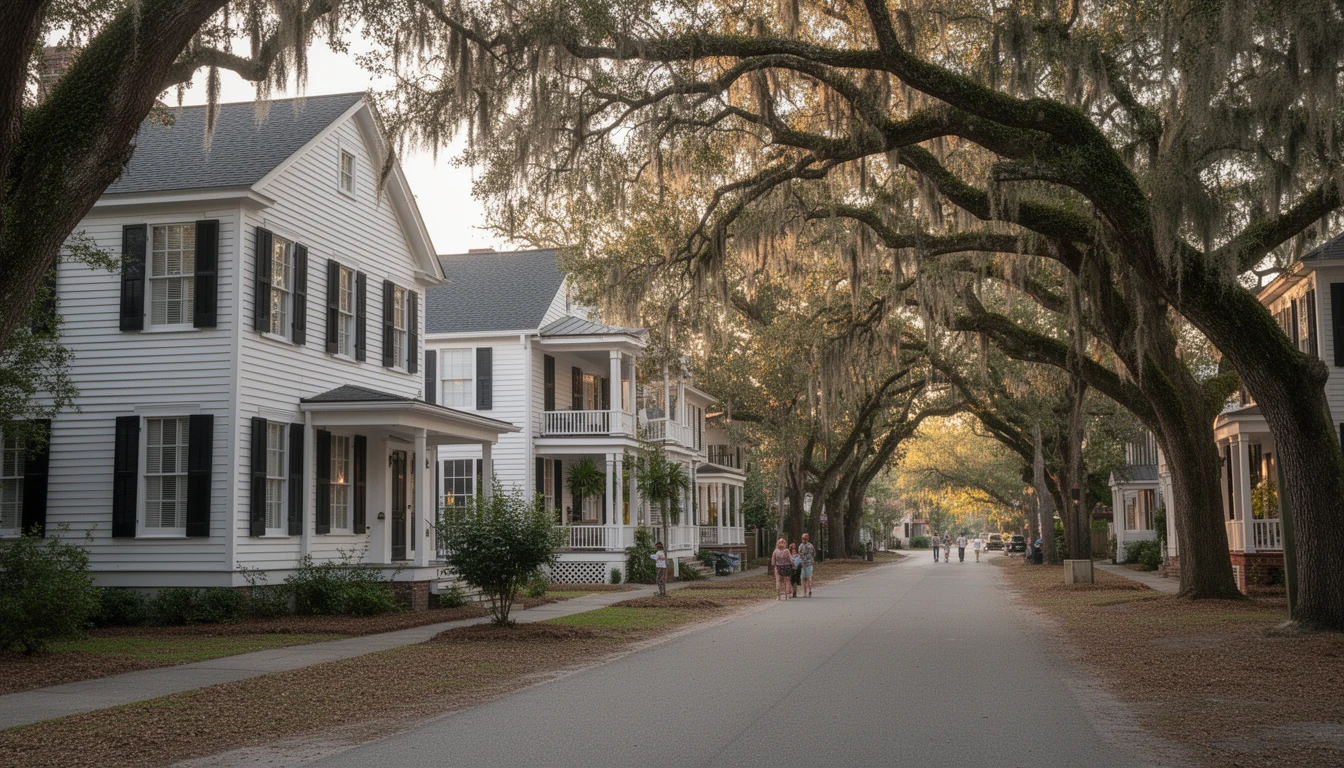
You can see the courthouse from half a block away on Church Street in the town of Hertford. It has held court since 1825, white columns and all, and the live oaks around the lawn drop shade so thick the grass stays damp until mid-morning. Across the river, Winfall’s rooftops climb the far bank, and somebody is usually idling at the swing bridge, waiting on a boat. If you are shopping old houses in Perquimans County, the phrase historic district shows up in a lot of listings. The phrase is doing less work than it looks like. It can mean two different things, and only one of them costs money.
The Record: Nineteen Listings, Five Districts
Start with what is actually on the books. The NC State Historic Preservation Office’s own roster counts nineteen properties and districts in Perquimans County on the National Register of Historic Places. HPO annotates one of them, the Isaac White House, as gone, so eighteen are still standing.
Five of the nineteen are districts rather than single buildings:
- Old Neck Historic District, listed 1996. A rural district, mostly north of the river, whose period of significance runs 1813 to 1946.
- Hertford Historic District, listed October 1998. The town’s core, wrapped around the courthouse and the waterfront.
- Belvidere Historic District, listed June 1999. Northwest part of the county, with the long Quaker history that shaped it.
- Winfall Historic District, listed January 2003. The county’s other incorporated town, just across the Perquimans.
- Hertford West Historic District, listed February 2025. The newest listing in the county, added just last year.
The individually listed buildings read like a county atlas: the Newbold-White House, Myers-White, Sutton-Newby, Samuel Nixon, Cove Grove, Land’s End, Stockton, Belvidere, Jonathan Hill Jacocks, Mitchell-Ward, and Fletcher-Skinner-Nixon houses, plus the 1825 courthouse (listed 1979) and the Church of the Holy Trinity (listed 1998). The Newbold-White House out on Newbold-White Road is the anchor of the group: dendrochronology of its rafter timbers pinned construction to 1730, and the Perquimans County Restoration Association, which operates it, describes it as the oldest brick house in North Carolina. It has been open Saturdays only, May through October, as of the 2026 season, so time your visit.
One thing you will hear, and one thing I am not going to repeat as fact: that Perquimans has one of the state’s leading concentrations of pre-1800 houses. That claim does not check out against SHPO, NCpedia, or the National Register nominations for the county’s own districts, so treat it the way you would treat an unpriced repair: verify it before you build on it.
National Register Listing Is Mostly Honorary
Here is the part that surprises buyers. A National Register listing, by itself, does not restrict what you do to your house. That is not my spin, it is the state’s. From HPO’s own National Register FAQ:
Listing in the National Register is mostly an honorary designation. Unless you are using federal funds, permitting, or licensing for a project that affects your National Register listed or National Register eligible property, you may do anything you like with your property.
So the 1730 Newbold-White House sits on the Register as a matter of national significance, and the Hertford Historic District marker at the edge of downtown is a point of pride. But if you buy a contributing house in one of those districts and want to replace a window, no federal reviewer is coming to your front door. National Register designation only gets a vote when federal money, permits, or licensing enter the picture, through a process called Section 106 review. For a normal private purchase with a normal private renovation loan, it is a bragging right, not a leash.
The Local Overlay Is a Different Animal
The second kind of historic district is created by a municipality, not by Washington. A town passes an ordinance, appoints a historic preservation commission, and that commission reviews exterior changes and issues Certificates of Appropriateness. HPO says it plainly: local designation should not be confused with listing in the National Register, which is a federal program administered by the state. A local overlay can control what you do with your own money. National Register listing, by itself, cannot.
So the question for any Perquimans parcel is which of the two, if either, actually applies. Here is the honest state of the record for the town of Hertford. The town does have a Historic Preservation Commission, a five-member board with three of five seats filled as of this writing. What I could not confirm from any published source is whether a local historic district overlay with mandatory Certificate of Appropriateness review actually applies, and if so to which parcels. The town’s zoning ordinance article index lists no historic district article and no COA article. The ordinance itself is published only as scanned image PDFs with no searchable text. No COA application form or design guidelines appear on the town’s site. And the town of Hertford is not a Certified Local Government, while Edenton and Elizabeth City are. In the unincorporated parts of the county, there is no municipal ordinance at all, so Old Neck and Belvidere are Register districts in the honorary sense and nothing more.
That gap in the record is exactly why the advice is boring and specific: before you write an offer on an old house in town, call Hertford Town Hall and ask whether a local overlay applies to that parcel and what it would require. It is a five-minute call that can move a five-figure number, and it beats finding out after you have ordered $40,000 of windows.
The Tax Credit That Applies to the House You Live In
Old-house buyers routinely reach for the wrong tax break. The federal 20 percent rehabilitation credit, IRS Section 47, only applies to income-producing property. If you are buying a house to live in, that credit is not yours.
Yours is the North Carolina homeowner credit under N.C.G.S. 105-129.106. In the statute’s words, a taxpayer who has rehabilitation expenses of at least $10,000 for a State-certified historic structure is allowed a credit equal to 15 percent of those expenses. HPO’s plain-language summary caps eligible expenses at $150,000, which puts the maximum credit at $22,500. Expenses count within any 24-month period, the credit can be claimed no more than once in any five-year period, and unused credit carries forward nine years.
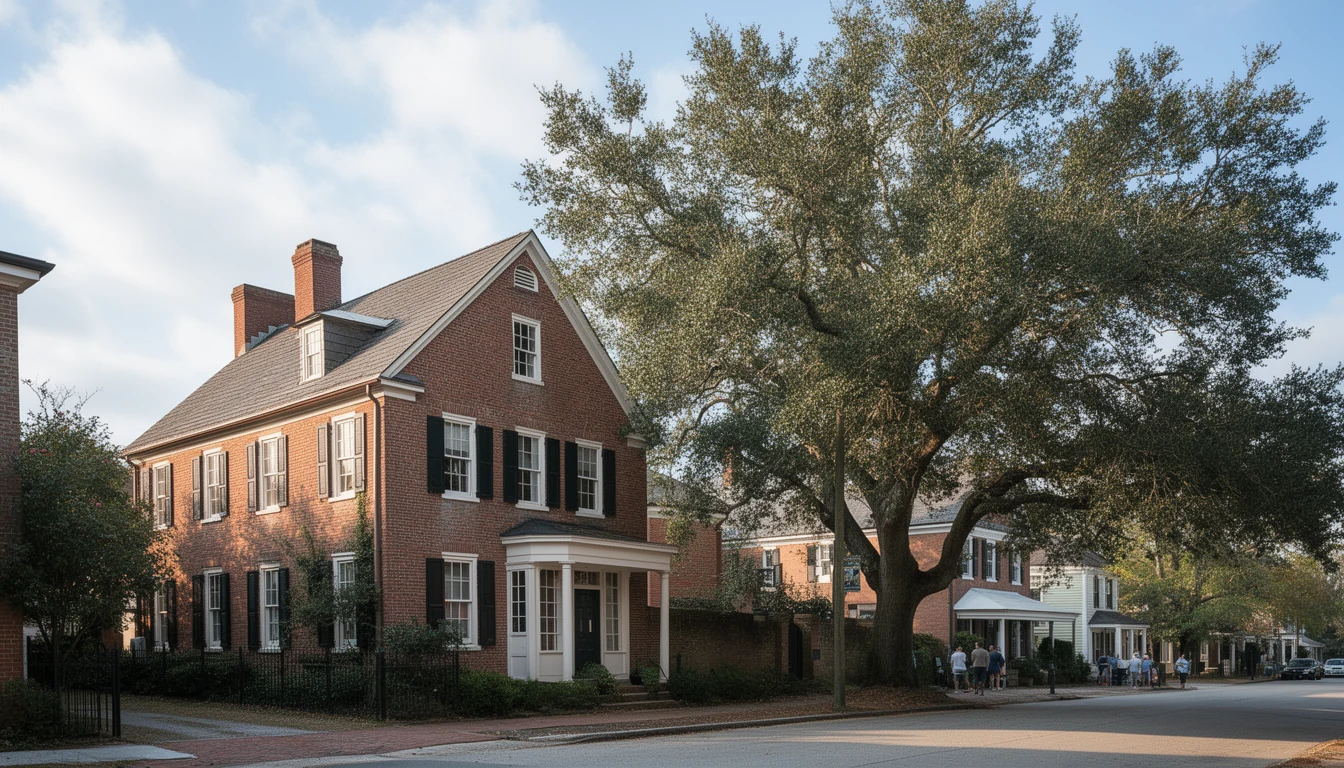
Two details matter for this county specifically. First, the statute covers a structure that is individually listed or certified as contributing to the significance of a National Register Historic District, so a contributing house in the Hertford or Hertford West districts can qualify even if it is not individually listed. Second, Article 3L sunsets: the credit expires for expenses incurred on or after January 1, 2030, and property must be placed in service by January 1, 2032. If the credit is load-bearing in your renovation budget, that deadline is closer than it sounds.
And sequence the paperwork before the work, not after. The credit runs through an application with SHPO, the fee is capped at 1 percent of qualified expenditures, and the filing is NCDOR form NC-Rehab. Work done before the paperwork is work that may not count. These are the statutory numbers as of this writing; tax provisions change, so confirm the current terms with a tax professional before you underwrite a renovation on the credit.
What Buying Old Here Actually Takes
None of this is a reason to avoid an old house. It is a reason to buy one with your eyes open about what the inspection stack looks like. On a house of this age you are looking at some combination of knob-and-tube or early cloth-sheathed wiring, plumbing older than anyone remembers, a foundation and sill condition you cannot see from the street, and, on the oldest stock, framing that was never designed around modern mechanical systems. Hire an inspector who has worked pre-war buildings, not one who mostly does 1990s subdivisions, and budget for the survey of what is behind the plaster, because that is where the number lives.
That is the honest trade. You get Federal doorways, brick laid in 1730, and a tax credit that can hand 15 percent back if you sequence it right. In exchange you get systems that ask for money on their own schedule and a renovation timeline that runs on the house, not on you. The county’s old stock is not a cheaper project than new construction. It is a different project, and the difference is knowable before you commit.
The Bottom Line
Before you make an offer on an old house in Perquimans County, get one answer in writing: which designation, if any, applies to this parcel. National Register alone is mostly honorary. A local overlay, if one exists for that address, can control your exterior changes through Certificate of Appropriateness review. And the state’s 15 percent homeowner credit can pay you back, but only with the paperwork filed first and only before the 2030 sunset. Bring the address to Hertford Town Hall, ask your agent to pull the parcel record, and do not let a love of old brick outrun a five-minute phone call. The houses will still be here. They have been for three hundred years.
Keep reading
7 Ways to Be a Good Albemarle Shoreline Steward
Seven practical ways Perquimans County shoreline owners protect the Albemarle: the CAMA lines, the 30 percent cap, septics, and slowing the rain.
Closing on the Albemarle Sound: 10 Things to Know
Ten things I verify before closing on Perquimans County water: flood maps, insurance math, CAMA permits, septic records, that 1% tax, and the financing.
Backing Out of a Home Purchase: What NC Buyers Risk
A 2022 NC Supreme Court ruling confirmed buyers who breach a purchase contract can owe attorney's fees. What that means for Perquimans County buyers.