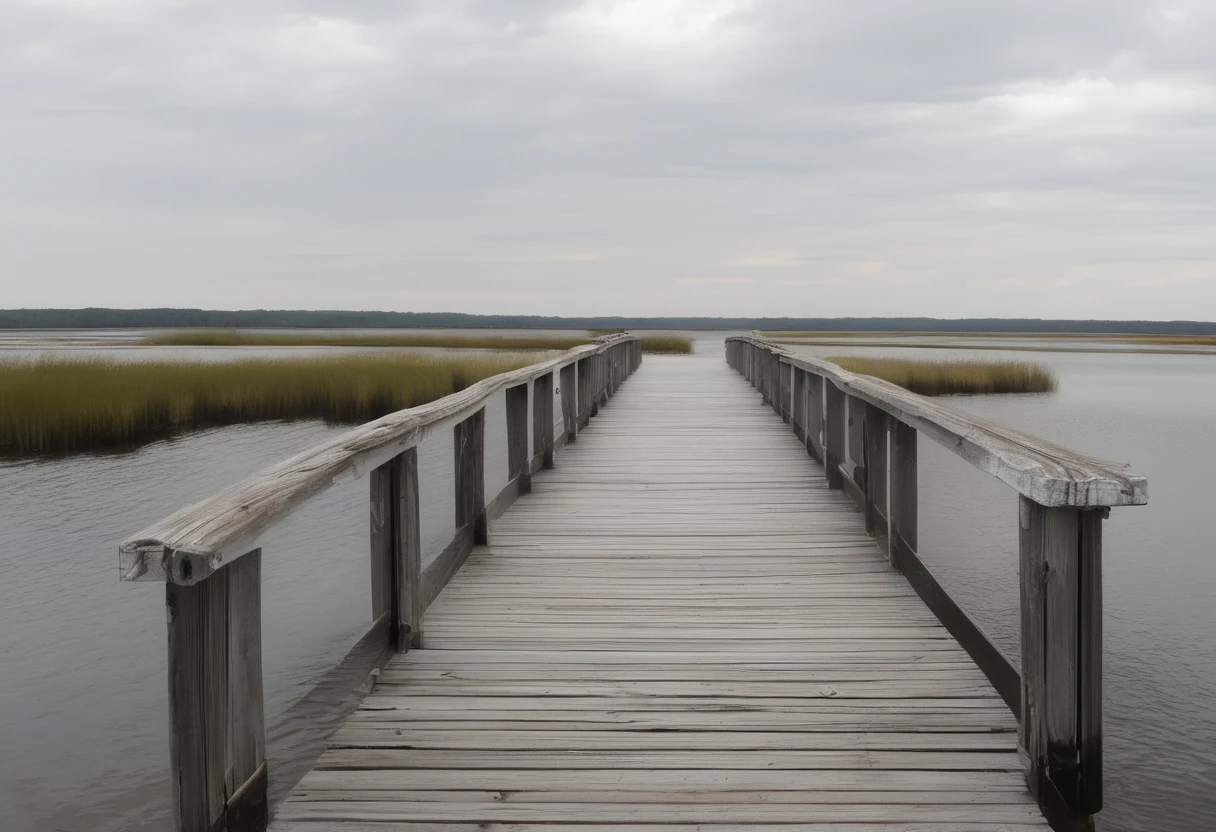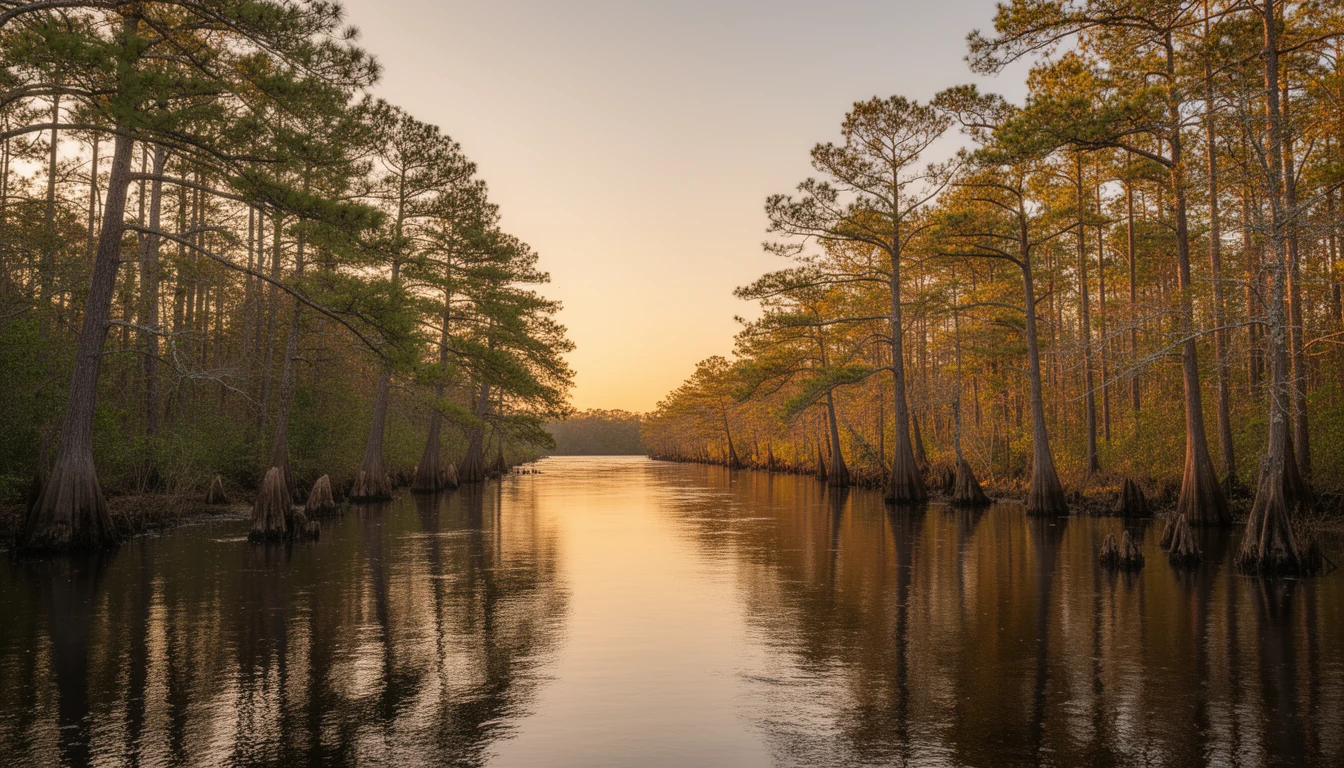


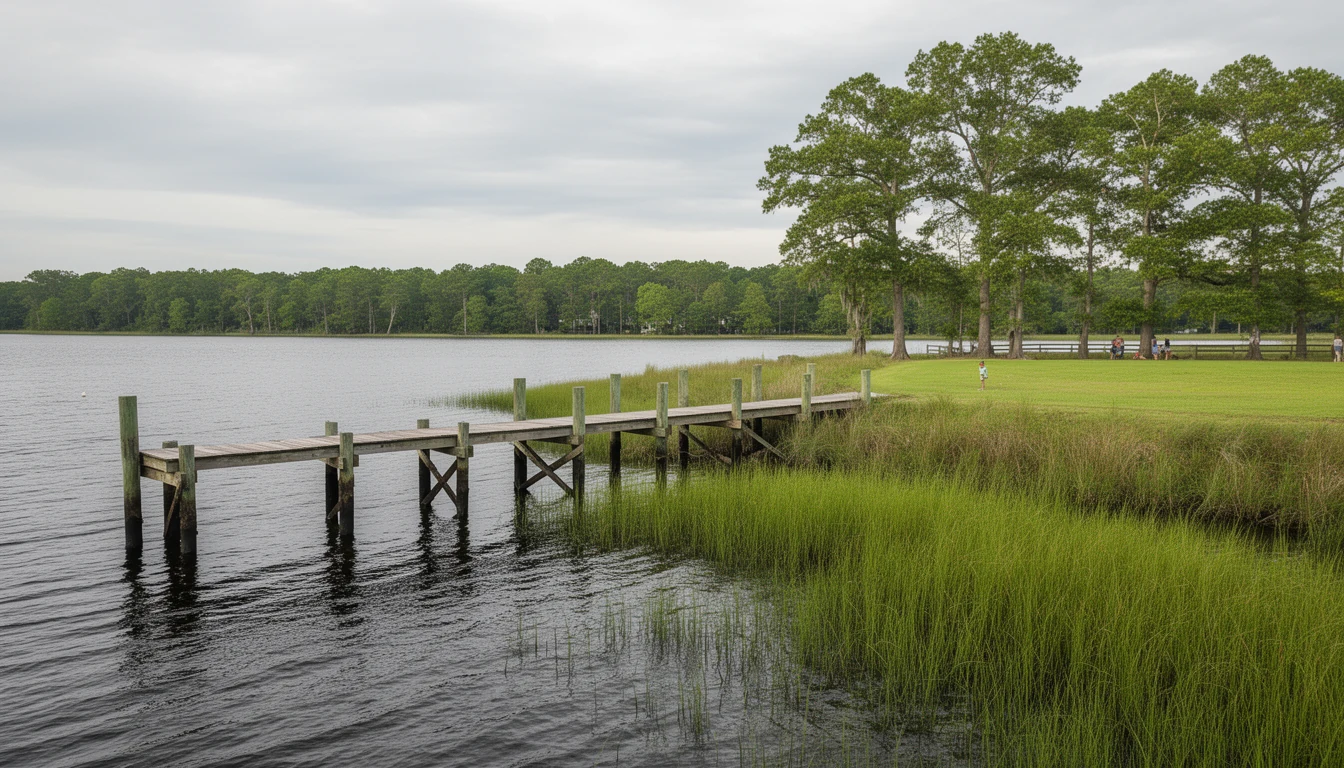
Nobody hands you a manual when you buy a shoreline lot in Perquimans County. The deed describes the parcel. It says nothing about the 75-foot line, the 30 percent cap, or the office in Elizabeth City that has to approve your dock. Perquimans is one of North Carolina’s twenty CAMA counties, so the Coastal Area Management Act sits alongside every waterfront purchase here. The learning curve is short, and the cost of skipping it is not. Here are seven things a good Albemarle shoreline steward does, roughly in the order they matter.
1. Find Out Which Line Your Shoreline Falls On
Start with the Area of Environmental Concern, because the width of that band decides how much of the lot is in play. On an estuarine shoreline the AEC runs 75 feet landward of normal high water. Upstream of the US 17 Business swing bridge in the town of Hertford, the reach is a public trust shoreline and the AEC narrows to 30 feet. Shorelines contiguous to Outstanding Resource Waters carry 575 feet.
One phone call settles which one applies: the Division of Coastal Management field office in Elizabeth City, at (252) 621-6450. Describe the parcel and they will tell you the class.
2. Design to the 30 Percent Cap, Not Against It
Inside the AEC portion of the lot, impervious surface is capped at 30 percent under 15A NCAC 07H .0209. That number surprises people who picture a wide driveway and a patio, then meet the cap in week three of due diligence.
Treat 30 percent as a design brief instead of an obstacle. Gravel instead of asphalt, and a smaller footprint sited further back from the bank. Permeable pavers where the plan wants a hard surface. If the plan genuinely needs more, the rule allows an innovative design that demonstrates equal or better protection, and that path is easier to take before the site plan is drawn.
3. Keep the House Off the Water and Out of the Marsh
15A NCAC 07H .0208 bars non-water-dependent uses from coastal wetlands, estuarine waters, and public trust areas, and it names a residence as the example of a non-water-dependent use. That is the rule that stops anyone building out over the river. The structure that actually needs the water is the exception: a pier or a dock built out to reach it.
A steward keeps the house on dry ground and lets the marsh work. Coastal wetlands rules apply throughout a CAMA county, not only inside the AEC, so a filled wetland is not a shortcut.
4. Treat the Septic System as Shoreline Infrastructure
Neither your well nor your septic system is permitted by the county. Albemarle Regional Health Services handles both for Perquimans and seven neighboring counties. On the water, a drain field is not just a household appliance. A system that fails to treat what it takes in sends the rest toward the river.
Keep the permit record in the file and pump on schedule. If a house is marketed as four bedrooms on a three-bedroom permit, resolve the record before someone else finds it at appraisal.
5. Slow the Rain Before It Reaches the Bank
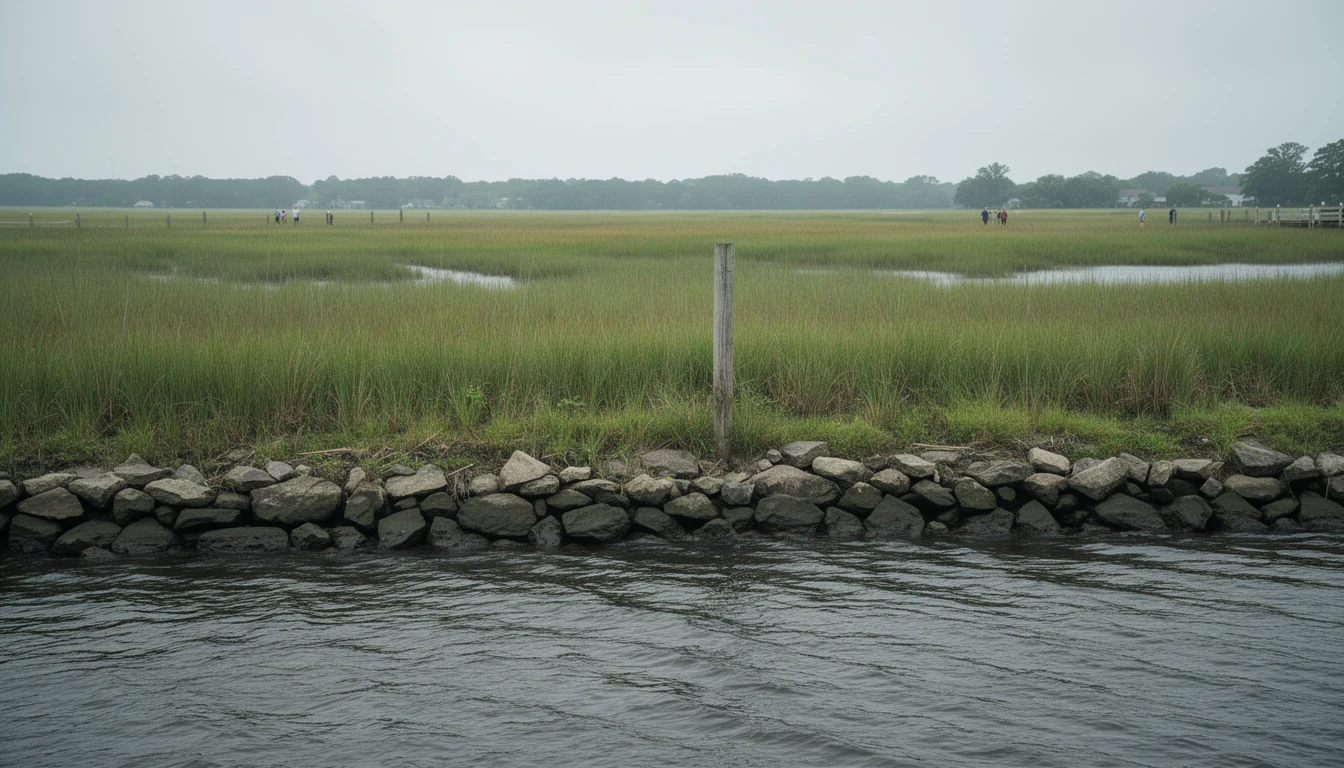
Stormwater is the slow, unglamorous way a shoreline degrades. A hard-packed yard sheds rain straight off the lot, and the bank absorbs the hit. Native plants and an unmowed buffer at the water's edge slow that down for almost nothing.
This is also the stretch where the river runs fresh at the town of Hertford and turns brackish toward the Albemarle Sound. What leaves your yard lands in a system with a real gradient. Nobody inspects your buffer. That part of stewardship is entirely yours.
6. Work With Wind-Driven Water, Not Against It
Water level on the Albemarle answers to wind, not to a tide table. A sustained northeast blow pushes water up into the river; a westerly pulls it out. That changes how a bulkhead or a riprap slope gets maintained.
Ask the neighbors what the water has actually done at that stretch over the last decade, because local memory is genuine data here. Repair before you rebuild, and price the first northeast storm into the maintenance budget. The Perquimans behaves like neither an ocean nor a lake, and the difference shows up in that budget.
7. Read the Plan Before You Build
Perquimans operates under a certified CAMA land use plan, the joint Perquimans County, Hertford, and Winfall plan certified on February 10, 2016 and amended in 2017 and 2018. If you are buying land with development in mind rather than an existing house, read it before you write the offer. It is the county's own statement of what it intends to allow along the water, and it costs an afternoon.
None of this asks you to become a conservationist. It asks you to read the rules that came with the view, make one call to Elizabeth City, and design inside the numbers before the site plan is final. The water in front of a Perquimans County lot is the reason most buyers look twice at this county. Keeping it that way takes a folder, a calendar, and some patience.